
Contents
The lights go out. Your refrigerator stops humming. The Wi-Fi router blinks off. Within seconds, your home transforms from a connected, climate-controlled space into something far more primitive. But what’s actually happening, both inside your walls and across the grid?
Your Electrical System Takes an Immediate Hit
When power cuts out, your home’s electrical system doesn’t just go quiet. Breakers handling near-capacity loads experience sudden stress, and any weakened wire connections, pinched wiring sections, or aging breakers are exposed to that abrupt change in electrical state.
The real danger, though, comes when power returns. As Integra Electrical explains, “that quick surge of electricity can pull against weakened connections, heat up pinched sections of wire, or push an already-tired breaker to its limit.” This is why AEP Energy recommends turning off appliances and dropping your thermostat to a minimum before power is restored, to reduce the surge load hitting your system all at once.
Surge protectors and uninterruptible power supply (UPS) units absorb that spike for sensitive electronics like computers and routers. Without them, anything with a circuit board is vulnerable.
Not All Outages Work the Same Way
Understanding the type of outage helps you respond correctly.
Blackout: A complete loss of power affecting your home or a wider area
Brownout: A partial voltage reduction, often intentional, where lights dim and motors strain
Rolling Blackout: A scheduled, rotating outage utilities use to manage grid demand during peak periods
If only part of your home loses power, check your GFCI (ground fault circuit interrupter) outlets first. These safety outlets, common in bathrooms and kitchens, can trip independently and simply need to be reset. A partial outage affecting specific circuits usually points to a tripped breaker rather than a grid-level issue.
Food Safety Has a Hard Deadline
According to FEMA’s Ready.gov guidelines, a refrigerator keeps food safe for roughly 4 hours with the door kept closed. A full freezer holds safe temperatures for 48 hours; a half-full freezer for about 24. The moment you open those doors, you burn through that window faster.
Perishables like meat, dairy, and cooked leftovers should be discarded if they’ve been above 40°F for more than two hours. When in doubt, throw it out.
The Consequences Go Beyond Losing Lights
Most people don’t realize how many home systems depend on electricity until they’re all offline at once. As one overview of unexpected power outage impacts notes, outages can shut down landlines, internet-based apps, and even some cell networks, making it hard to reach family or emergency services.
Other systems that fail quietly during an outage include:
- Sump pumps, which stop working and create flood risk in basements during storms
- Home security systems, unless they have dedicated battery backup
- Well pumps, cutting water pressure entirely for homes not on municipal supply
- Medical devices like CPAP machines and oxygen concentrators, which stop functioning immediately
If anyone in your household depends on electrically powered medical equipment, register with your utility company as a medical baseline customer. Many utilities prioritize restoration for those accounts.
What Utilities Do While You Wait
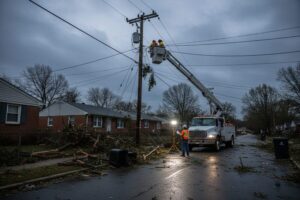
Restoration follows a priority sequence: transmission lines and substations come first, then critical facilities like hospitals, then residential neighborhoods. Storm-related outages take longer than equipment failures because crews must physically clear damage before repairs can begin. A detailed breakdown of outage reporting and utility response can help set realistic expectations for how long you might be waiting.
Typical restoration times range from one to four hours for localized equipment failures, and potentially several days for major storm events.
Protecting Your Home Before the Next Outage
A solid preparedness plan covers three windows of need:
- 24-hour kit: Flashlights, batteries, bottled water, phone charger, first aid supplies
- 72-hour kit: Additional food, cash, manual can opener, weather radio
- Week-long readiness: Portable generator for outdoor use, fuel storage, expanded water supply
Carbon monoxide poisoning from generators used indoors is a leading cause of storm-related deaths, according to CDC and FEMA data. Generators must run outside, at least 20 feet from any window or door, with no exceptions.
For whole-home coverage during extended outages, a battery backup system or standby generator with a transfer switch is worth exploring. We break down the most reliable options in our home backup power solutions guide.
After Power Returns
Resist the urge to flip everything back on at once. Restore power gradually, starting with essential appliances and waiting a few minutes between each. Check your electrical panel for any breakers that tripped during the outage.
If you notice burning smells, flickering lights, or outlets that stopped working, contact a licensed electrician before using those circuits again. Outages are temporary, but the electrical damage they leave behind can be permanent if ignored.